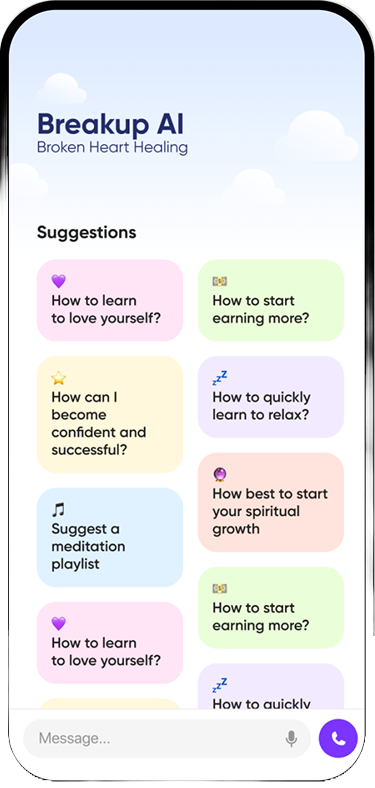




Table of Contents
- The Psychological Impact of Heartbreak
- Steps Toward Healing Old Wounds
- The Role of Social Support
- Cognitive Restructuring: Changing Your Thought Patterns
- The Power of Gratitude and Forgiveness
- Embracing Growth: Moving Beyond Heartbreak
- Conclusion: Growth Beyond Pain
The Psychological Impact of Heartbreak
Heartache can be as punishing as a physical blow, igniting brain areas linked to distress and dependency (Kross et al., 2011). The end of a cherished bond pulls us into a whirlpool of sadness, fury, and feelings of inadequacy. According to a survey by Match.com, 54% of participants claimed they shed pounds after a breakup, fueled by stress and dwindled appetite — testifying to emotional turmoil’s tangible toll.
Seeing the parallel between emotional pain and physical hurt enriches our grasp of emotional recovery. With this in mind, approaching healing with kindness and patience becomes crucial — akin to caring for a wound.
Steps Toward Healing Old Wounds
1. Acceptance and Reflection
The springboard to emotional recovery lies in acceptance. Feelings—anger, sorrow, or even relief—deserve acknowledgment without casting judgment. Consider the entire arc of the relationship, the good moments and the bad. A piece in Personality and Social Psychology Bulletin (Lewandowski, 2012) implies that by shining a light on a breakup’s silver linings—personal growth, future opportunities—one can quicken emotional recovery.
2. Self-Care and Mindfulness Practices
Embrace rituals of self-care that nurture both body and mind. Mindfulness and meditation are invaluable, their power to melt stress and sharpen emotional control proven in Health Psychology Review (Gu et al., 2015). Commence with concise, daily mindfulness sessions, slowly weaving tranquility into the tapestry of your life.
3. Reconnect with Your Identity
In heartbreak’s aftermath, rediscover who you are without the “us” of the relationship. Space created by this process of redefinition can be filled with hobbies, new interests, renewed friendships—activities that stitch together your renewed identity. This journey not only rekindles your essence but also forges fresh, uplifting paths.
The Role of Social Support
Leaning on friends and family during emotional storms is not just advisable—it’s essential. A study highlighted in PLOS Medicine by Holt-Lunstad et al. (2010) emphasizes that solid social bonds offer a 50% boost to survival odds, underscoring the profound impact of these connections on health and longevity. Whether it’s through confidants or shared support group experiences, these links weave a safety net that catches us when we falter.
Cognitive Restructuring: Changing Your Thought Patterns
The path to healing demands we challenge those corrosive thought loops that amplify distress. Cognitive restructuring presents a method to spot and reshape such patterns, swapping faulty notions with balanced truths. Rather than branding the breakup as a personal failing, why not frame it as a learning milestone?
The Power of Gratitude and Forgiveness
Cultivating gratitude shifts focus from what’s lost to what remains or flourishes, nurturing a positive frame of mind. A gratitude journal, where you jot down moments of daily delight, can bolster this mindset. Moreover, forgiveness, while often elusive, can free us from emotional shackles. Letting go of resentment against an ex liberates, diminishing stress—as shown by research in the Journal of Behavioral Medicine (Toussaint et al., 2021).
Embracing Growth: Moving Beyond Heartbreak
Heartbreak, however painful, can spark transformative personal growth. Seek solace in books, therapy, or personal enrichment courses that bolster resilience. A study in PLOS ONE (Fagundes et al., 2014) suggests that writing about emotional upheavals can noticeably enhance both emotional and physical health.
Pursue goals that resonate with new passions or hopes. View the future as fertile ground for what might be, rather than a shadowy unknown.
Conclusion: Growth Beyond Pain
The journey of healing post-heartbreak is not swift—requiring time, grace for oneself, and an open heart. By intertwining self-care, mindfulness, social bonds, mental reframing, gratitude, and forgiveness into daily practices, the path to emotional recovery becomes clearer. Remember, each stride in healing is a salute to your resilience and potential for growth.
Whether initiating this journey or entrenched in it, honor every emotion. Recognize every effort as progress toward forging a better self. May this chapter of your life fortify strengths, guiding you to a horizon bright with love and endless possibilities.
In every struggle, there lies untapped strength. Embrace each emotion today, respect your journey, and make the bold choice to move toward healing. How can we assist you on this path?
References:
- Kross, E., Berman, M. G., Mischel, W., et al. (2011). Social rejection shares somatosensory representations with physical pain. PNAS.
- Lewandowski, G. W. (2012). The role of self-concept clarity in relationship quality. Personality and Social Psychology Bulletin.
- Gu, J., Strauss, C., Bond, R., & Cavanagh, K. (2015). How do mindfulness-based cognitive therapy and mindfulness-based stress reduction improve mental health and wellbeing? A systematic review and meta-analysis of mediation studies. Health Psychology Review.
- Holt-Lunstad, J., Smith, T. B., & Layton, J. B. (2010). Social relationships and mortality risk: A meta-analytic review. PLOS Medicine.
- Toutssaint, L., Barry, M., Bornfriend, L, & Markman, H. (2021). The effects of forgiveness on mental and physical health: A meta-analytic review. Journal of Behavioral Medicine.
- Fagundes, C. P., & Bonanno, G. A. (2014). What can we learn from resilience? An approach to emotional recovery and adaptation. PLOS ONE.